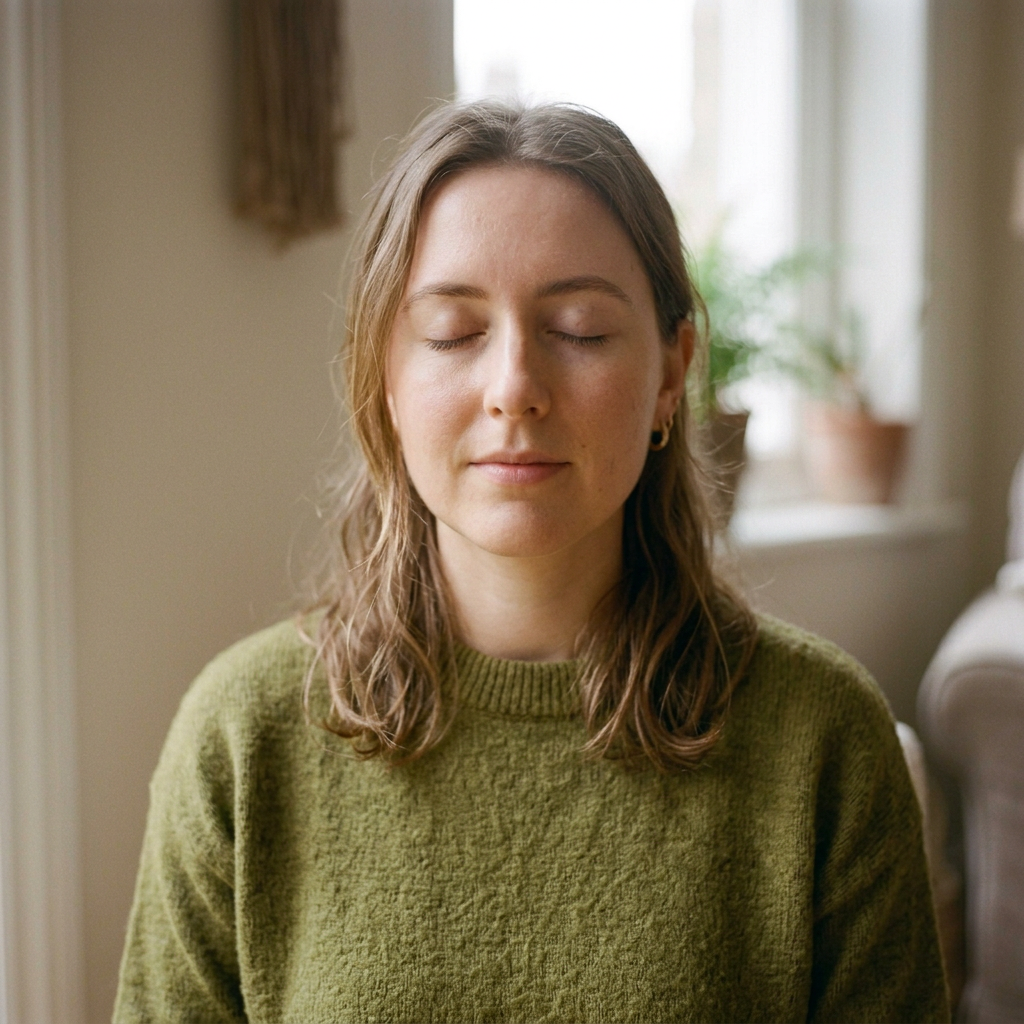
Most people describe hypnosis as “a relaxed, focused state of mind.” That’s true, but it’s only part of the picture. In my experience, hypnosis works better understood as a three-part process:
- You participate
- You relax into a focused state
- I guide you with a script built around your goal
Here’s how each part works
1. You’re in control.
Forget the movies. No one can be hypnotized against their will, and no one can “make” you cluck like a chicken. I’d actually go a step further and say all hypnosis is really self-hypnosis — I’m just guiding you through a relaxation process and talking you through it. You’re doing the work. You could stop, open your eyes, or walk out at any point, and nothing bad would happen.
2. You relax into a focused, calm state.
This is sometimes called a “trance,” which sounds mysterious, but it’s really just a deeply relaxed, focused state of mind — similar to the feeling right before you fall asleep, or the “zoned in” feeling you get driving a familiar route. You’re not asleep. You’re not unconscious. You’re aware and awake the whole time — just very calm and very focused.
3. I use a script built specifically for you.
Once you’re relaxed, I talk you through a script designed around whatever you came in for — better sleep, less stress, stop smoking, performance, whatever your goal is. It’s not one-size-fits-all; it’s built around you.
So here’s the bottom line: you stay in control the entire time. The relaxed state you enter is a natural one — it’s the same general kind of calm, focused state you already dip into during the day without realizing it. And my job is simply to guide you into that state and help you use it toward what you came here for.
There’s good research behind this, too — studies suggest that this kind of relaxed, focused state can genuinely support well-being, imagination, and creativity.
For anyone who wants a little more of the “why” behind this — brain researchers categorize mental states by brainwave activity. Very roughly:
- Deep sleep = slowest brain activity
- The relaxed, focused “trance” state used in hypnosis = a bit faster than deep sleep — calm, but alert
- Everyday relaxed alertness = a bit faster still
- Active concentration and focus = faster yet
- Peak learning/insight moments = the fastest
These are general patterns, not hard rules — every brain is a little different.
Disclaimer: The “Just Suppose & Level Up Blog” shares ideas in exploring personal progress, drawn from various sources. It’s intended as information only, not advice to engage in any specific activity. Always consider whether these ideas are right for you, and check with your health professionals.
Discover more from Kevin Rogers Hypnosis
Subscribe to get the latest posts sent to your email.