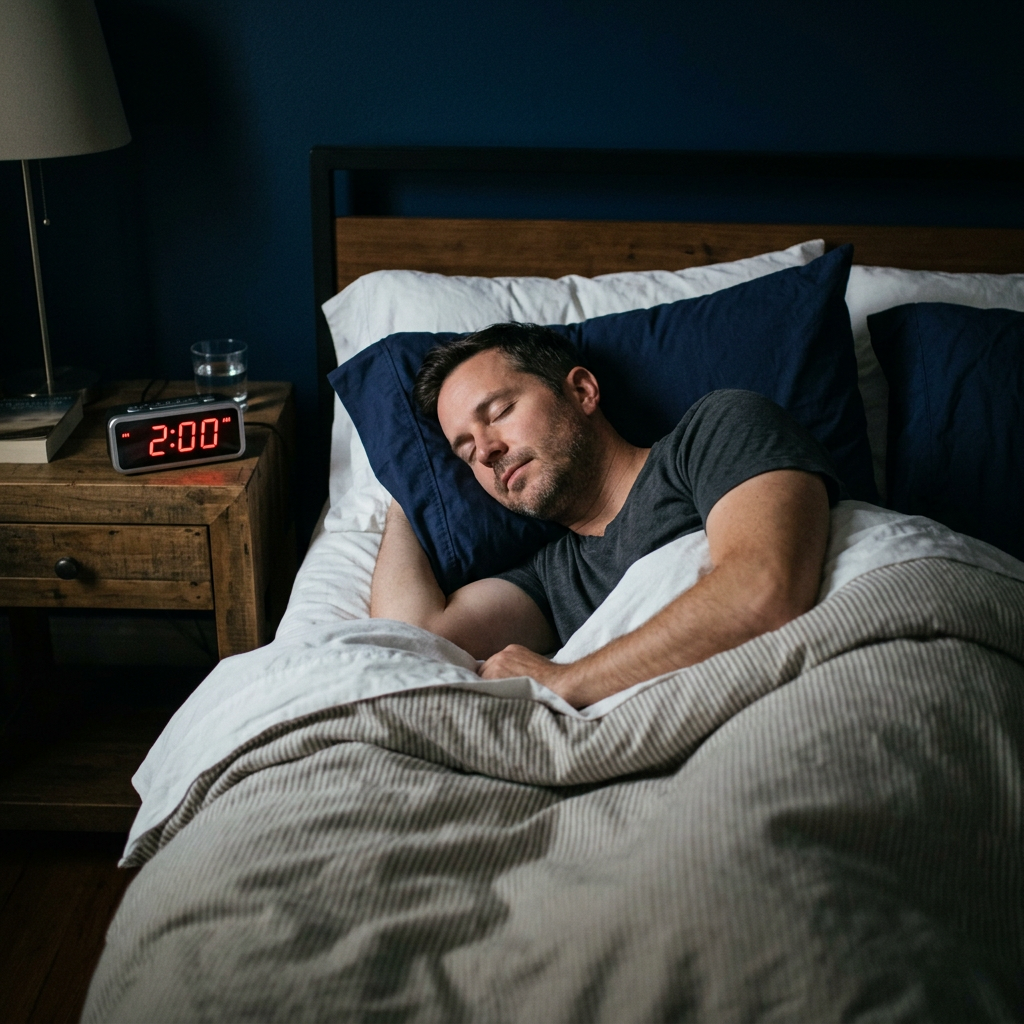
Resetting the System
How hypnosis helps the alarm stand down, and what the sleep lab shows when it does
Over this series, we’ve seen why so many people lie awake. A nervous system built for short emergencies never gets the all-clear (Part 1). Sleep is a switch, and stress keeps loading the wrong side (Part 2). And the harder we push, watch and fight, the more awake we stay (Part 3).
Put that together, and a real reset has to do three things:
Apply the brake. Shift the body out of fight-or-flight.
Safety. Give the brain a reason to stand down.
Occupy the mind without effort. Give the night watchman something absorbing that isn’t the job of sleeping.
Hypnosis is built to do all three at once. And this isn’t just a claim. It has been measured.
What Hypnosis Is (and Isn’t)
Hypnosis doesn’t knock you out, and you don’t lose control. It’s a state of focused, absorbed attention, like being so caught up in a good book that the room around you fades. That absorption is exactly what a racing mind at bedtime is missing. You don’t try to sleep. You follow along, and the settling happens on its own.
The Watchman Goes Off Duty
At Stanford, researchers scanned the brains of people during hypnosis and found three changes that line up with this series:
- The monitoring system quieted. Activity dropped in a region that decides what deserves attention. The researchers linked it to decreased attention to the outside world. That’s the night watchman going off duty.
- Brain-body control strengthened. Connections increased between a planning region of the brain and the area that reads signals from the body, which the researchers linked to engaging with reduced anxiety.
- Mental chatter faded. The link to the brain’s self-focused, ruminating network weakened. The researchers called it “disengagement from internal mental processes.”
Deeper Sleep, Measured in the Lab
At the Universities of Zurich and Fribourg, sleep researchers Maren Cordi and Björn Rasch didn’t ask people how they slept. They recorded their brain waves.
In their first study, published in the journal Sleep, participants listened to either a 13-minute hypnosis recording or a neutral spoken text before a nap. Among those who responded to the hypnosis, deep, slow-wave sleep, the most restorative stage, increased by 80%, and time spent awake dropped by about a third.
The results held up in later studies. In older women, whose deep sleep naturally declines with age, responders gained 57% more deep sleep and showed better thinking performance afterward. And the effect carried over from naps to full nights of sleep.
The Words Matter
Here’s the finding that ties the whole series together. The recording that worked invited listeners to follow a dolphin diving deeper into the sea, paired with suggestions of safety, relaxation and letting go. A similar recording with a boat floating on the surface, without those suggestions, didn’t deepen sleep.
And simply wanting to sleep better, without hypnosis, didn’t help at all.
Remember Part 1: the brain stands down when it registers safety, not just when a threat goes away. In the lab, the version that delivered that signal of safety was the one that worked. The right words, delivered the right way, made the difference.
The Body Follows
In a 2022 follow-up, the researchers measured what happened in the body. When hypnosis deepened sleep, growth hormone, a key hormone for physical repair, rose more than fourfold, to levels normally seen only in deep nighttime sleep. And the nervous system shifted away from fight-or-flight.
The researchers described it as “a whole-body pattern characteristic of natural” deep sleep. In the language of this series, the brake came back on.
Beyond the Lab
Clinical trials have found the same direction of benefit in real life, often with recordings people use at home:
- In a five-week trial, adults with mild memory problems who listened to a sleep hypnosis recording daily reported better sleep quality and less daytime sleepiness than those who listened to white noise.
- In menopause research, hypnosis reduced hot flashes and improved sleep quality.
- Across the research, hypnosis has shown very few side effects.
Why Working With a Hypnotist Helps
Not everyone responds to hypnosis in the same way, and the lab showed that the specific suggestions matter. A recording delivers the same words to everyone. A session with a trained hypnotist can be shaped around you: your stress, your thought patterns, the way you respond, and what keeps your alarm running at night.
The Bottom Line
- Sleep isn’t something you can force. It happens when the alarm stands down.
- Hypnosis quiets the mind’s night watchman, signals safety and lets the body settle without effort.
- In the sleep lab, hypnosis deepened restorative sleep in people who responded and shifted the body into its natural deep-sleep pattern.
- The words matter, which is why an approach shaped around you can make a difference.
You were never supposed to make sleep happen. Your job was only to stop keeping it out, and, when the alarm won’t stand down on its own, to give it a better signal.
Disclaimer: This post shares information considered reliable from various sources. It is intended as information only and is not intended as advice to engage in any specific physical or mental activity. Always consider whether this information is appropriate for you and always confer with your health professionals.
Discover more from Kevin Rogers Hypnosis
Subscribe to get the latest posts sent to your email.