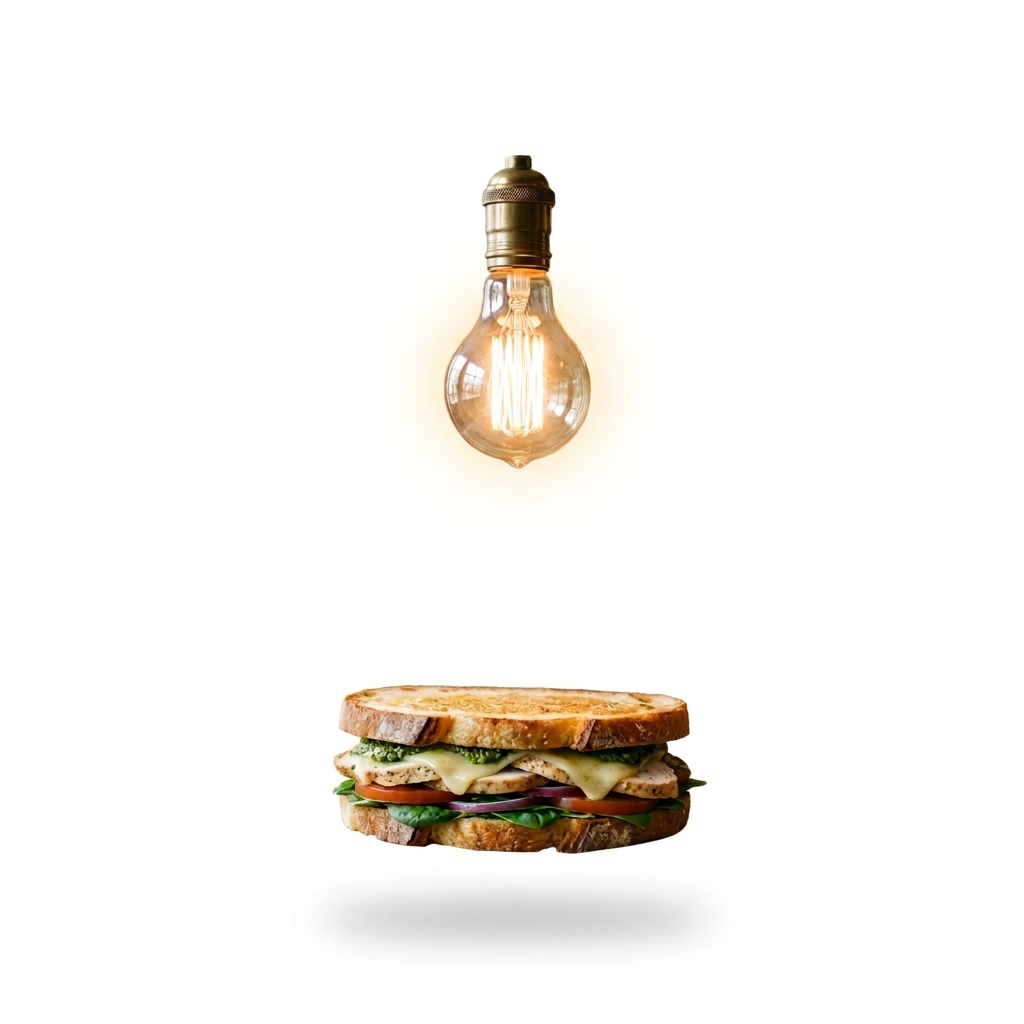
When the Feedback Sandwich Works — And When It Backfires
The Critique, or Feedback, Sandwich has been around for years. I ‘ve written about it before. Open with something positive. Deliver the criticism. Close with something positive. Praise, correction, praise — the feedback sandwich.
It is one of the most widely taught communication tools, and it has been taught more or less unchanged since the 1980s. It is also one of the most argued about theories, and if you go looking for a verdict you will find confident people telling you it is positive and negative. The research does not settle that argument. What it does is something more useful: it shows when it’s helpful and when it’s not.
What the sandwich reliably does
One effect shows up consistently: people like it. Davies and Jacobs (1985) had participants receive feedback in varying arrangements of positive and negative statements. The version with negative information bookended by two positives was rated best overall.
Parkes, Abercrombie and McCarty (2013) went further and put both outcomes side by side. Their title says it: feedback sandwiches affect perceptions but not performance. Recipients rated the sandwiched feedback more favorably but their subsequent work did not improve.
Then a result that cuts the other way
In 2020, Prochazka, Ovcari and Durinik ran an experiment published in Learning and Motivation. Ninety-one university students worked twelve secondary-school mathematics problems, then were randomly assigned to one of three conditions: corrective feedback describing their mistakes, that same corrective feedback sandwiched between two positive statements, or no feedback. Each then had ten minutes to prepare for a second, similar set.
The sandwich group solved more problems in the second set than either the corrective-only group or the no-feedback group. Not just liked it more. Performed better.
And here is the detail that makes it interesting rather than merely reassuring. The two positive statements were written before the experiment started. They were generic. They had no connection to any participant’s actual effort or performance. The praise was unearned and impersonal — and the sandwich still worked. The praise does not have to be specific and sincere.
The mechanism that reconciles both results
Kluger and DeNisi’s explanation for their own findings is called feedback intervention theory, and it is about attention rather than emotion.
They described three levels where a person’s attention can land when they receive feedback: on the task itself, on the motivation to do the task, and on the self. Their central finding was that feedback becomes progressively less effective as attention climbs that hierarchy — away from the task and toward the self.
This is the whole story. Feedback fails when it converts a question about the work into a question about the person. The correction may be entirely accurate; if the recipient’s attention has moved to what does this say about me. The person isn’t motivated when the correction is personal.
A test you can run in three seconds
Before you use the structure, ask one question: is the thought here to keep their attention on the work, or to make this easier for me? If it is the first, use it. If it is the second, drop it and say the thing plainly.
What holds up regardless
Whichever structure you choose, the attention finding applies. Four things follow from it.
Keep the correction at task level. “The third slide has the wrong figure” points attention at the slide. “You are careless with details” points it at the self, where the research says the critique is ineffective.
One correction, not five. Attention is finite. A list forces the recipient to rank and prioritize, and ranking your own failures is a self-level activity. Pick the one that matters most.
Time it close to the next attempt. Behavioral work on feedback delivery suggests giving one type of feedback at a time and placing the corrective piece near the person’s next chance to perform.
Let praise be praise. When someone does good work, say so at the time, on its own, because it tells them what to repeat. Praise that only ever appears as packaging for criticism eventually stops functioning as praise.
Why a hypnotist is writing about this
Because everything above is a story about attention. That is the territory I work in. People come to me because their attention has gotten stuck somewhere that isn’t helpful.
The feedback sandwich is a small tool with a narrow range of good uses when applied properly.
Disclaimer: This post shares information considered reliable from various sources. It is intended as information only and is not intended as advice to engage in any specific physical or mental activity. Always consider whether this information is appropriate for you and always confer with your health professionals.
Discover more from Kevin Rogers Hypnosis
Subscribe to get the latest posts sent to your email.
