Is Hypnosis Fake? Here’s What the Research Actually Shows
If you’ve ever considered hypnosis and stopped yourself with the thought, “isn’t that just fake?” — you’re not alone, and it’s a fair question to ask. Nobody should hand over their trust to a technique without evidence behind it. So let’s skip the stage-show imagery and look at what neuroscience has actually found when researchers put hypnosis under a brain scanner.
Short answer: No, hypnosis is not fake. It’s a measurable neurological state, and the research showing that has gotten a lot stronger in just the last two years.
Click Here For A Quick Summary Of This Article In My Brain Bites
The Stanford Brain Scan Study
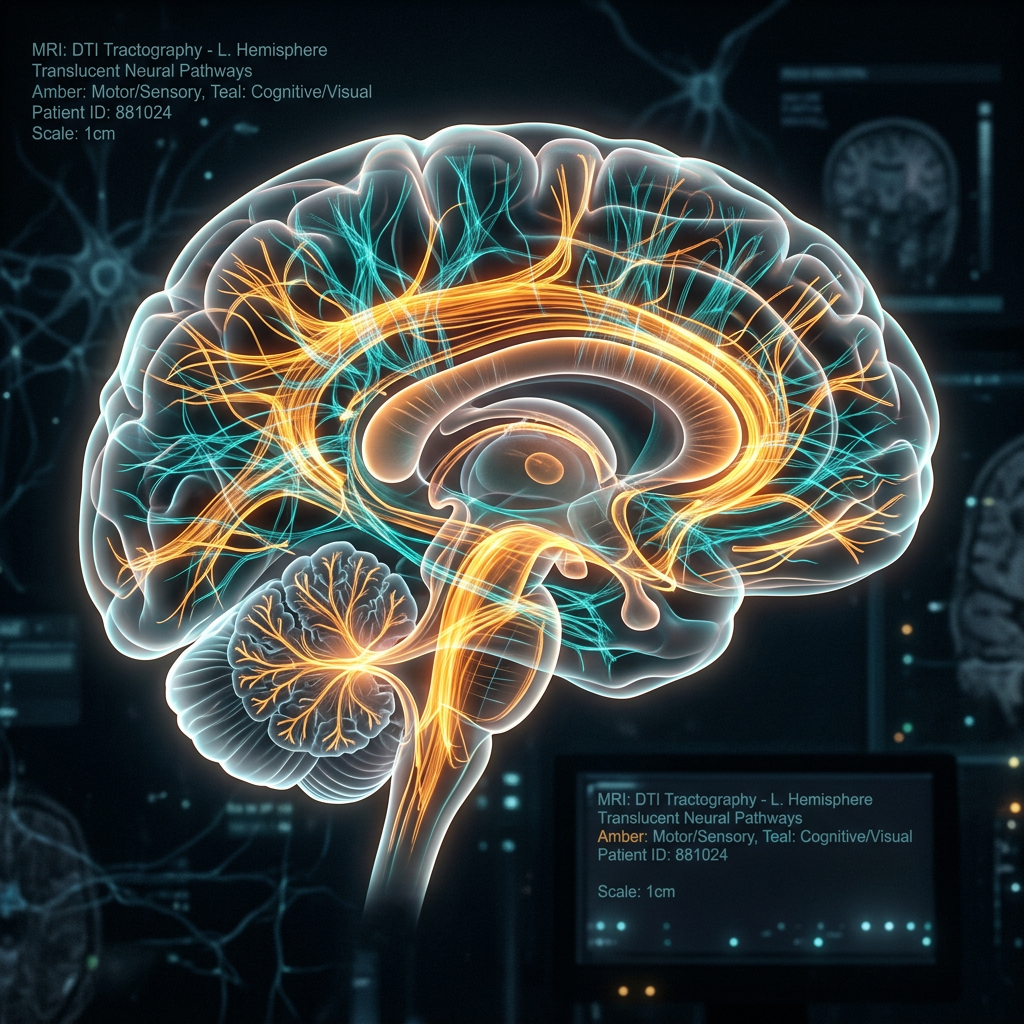
One of the most cited pieces of evidence comes out of Stanford University School of Medicine, where Dr. David Spiegel and colleagues put people through guided hypnosis while monitoring their brain activity with fMRI. The scans showed real, consistent changes across specific brain regions — not random noise, not a placebo pattern, but a repeatable neurological signature.
Two things happened. First, the areas of the brain responsible for focus and for monitoring your own actions appeared to disconnect from each other — which lines up with why people in hypnosis can concentrate intensely without the usual self-conscious “am I doing this right?” chatter getting in the way. Second, activity dropped in the part of the frontal cortex tied to moment-to-moment self-monitoring and evaluation. That’s a plausible mechanism for why hypnotic suggestion can bypass the kind of second-guessing that normally blocks behavior change.
The 2024 Zurich Multimodal Studies
This is the newest and, frankly, the most rigorous evidence to date. A team led by neuroscientists Philipp Stämpfli and Mike Brügger, working out of the University Hospital of Psychiatry Zurich and the University of Zurich, ran what’s described as the first standardized, multimodal hypnosis research project — meaning they used three different imaging techniques (fMRI, EEG, and magnetic resonance spectroscopy) on the same group of participants across two hypnotic depths.
The findings, published across Frontiers in Human Neuroscience, Cortex, and Scientific Reports in 2023-2024, were summarized plainly by the researchers themselves: hypnosis genuinely changes something in the brain, and the hypnotic effect is neither invented nor faked. They also found evidence for something clinicians have long suspected but couldn’t previously prove — that hypnosis isn’t one uniform state, but occurs at different depths with different neurochemical signatures.
What the American Psychological Association Says
In April 2024, the APA’s Monitor on Psychology published a deep dive into the current state of hypnosis research, tracking how clinical hypnosis has moved from the fringes into mainstream integrative treatment. The piece is careful to note that hypnosis isn’t a cure-all — neuroimaging studies still show little consensus on exactly which brain regions and networks are involved — but the clinical outcomes data has been consistent enough that practitioners are increasingly folding hypnosis into evidence-based treatment plans, often alongside therapies like CBT rather than as a replacement for them.
The Outcomes Data
Brain scans tell you something is happening. Outcomes research tells you it matters. A 2024 systematic review out of Leipzig University pooled 49 separate meta-analyses covering 261 randomized controlled trials, and found medium-to-large effects for hypnosis across pain management, anxiety reduction, and a range of medical procedures. For pain specifically, people receiving hypnosis reported more relief than about 73% of people in control groups — a substantial effect size by clinical research standards, not a rounding error.
Where the Honest Caveats Are
Because credibility means being straight about the limits too:
- Not everyone responds to hypnosis the same way. Research from Baylor University’s Gary Elkins suggests hypnotic responsiveness falls on something close to a normal distribution — a portion of people respond quickly and deeply, a portion respond less, and most people land somewhere in the middle.
- Hypnosis is not mind control, and it’s not a stage trick that overrides your will. It’s a state of highly focused attention paired with reduced self-monitoring — you remain aware and in control throughout.
- Researchers are still working out the exact brain networks involved, and results vary across studies. That’s normal for an active research area; it doesn’t undercut the core finding that something real and repeatable is happening.
The Bottom Line
Hypnosis isn’t a magic trick, and it isn’t a matter of blind faith either. It’s a documented neurological state with a growing, increasingly rigorous evidence base behind it — brain imaging that shows real changes, and clinical trials that show real outcomes. For a field that’s spent decades fighting an outdated stage-show reputation, this new wave of research is exactly the kind of receipts a skeptical, analytically-minded person should want to see before trying it.
Sources referenced:
- Spiegel, D. et al., Stanford University School of Medicine — fMRI study on hypnosis and brain activity
- Stämpfli, P., Brügger, M., de Matos, N.P. et al. — Frontiers in Human Neuroscience (2023), Cortex (2024), Scientific Reports (2024)
- Weir, K. (2024). “Uncovering the new science of clinical hypnosis.” Monitor on Psychology, 55(3). American Psychological Association.
- Systematic review of 49 meta-analyses / 261 RCTs, Leipzig University (2024)
- Elkins, G., Baylor University — hypnotizability distribution research, cited in APA (2024)
Discover more from Kevin Rogers Hypnosis
Subscribe to get the latest posts sent to your email.