If you asked most people where serotonin comes from, they’d say the brain. That’s the story we’ve all absorbed — “happy chemical,” brain chemistry, antidepressants targeting brain receptors. It’s not wrong, exactly. It’s just incomplete.
About 90% of the serotonin in the body isn’t made in the brain at all. It’s made in the gut.
That fact tends to stop people. It stopped me the first time I read it too, because it reframes something we usually treat as purely psychological — mood — as something with a direct physical supply chain running through digestion.
The Second Brain You Didn’t Know You Had
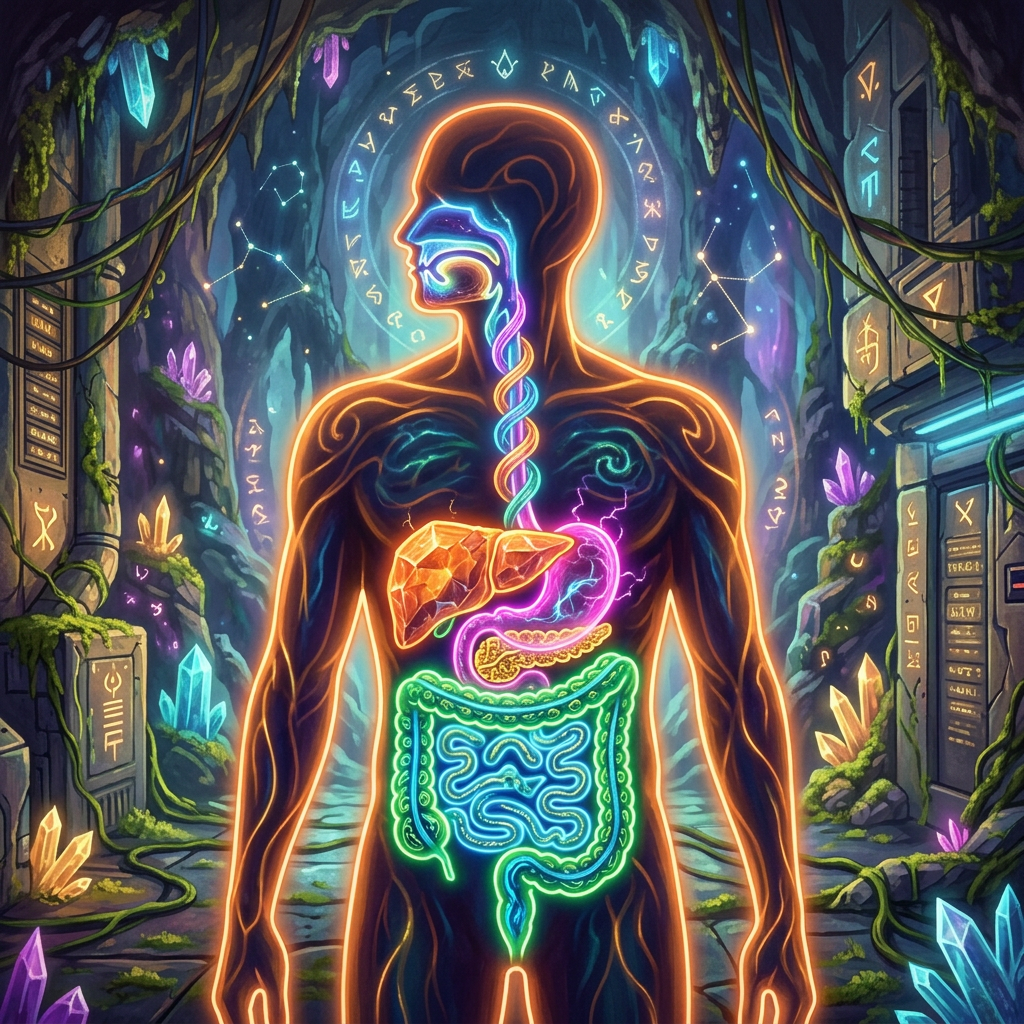
Your gut has its own nervous system, called the enteric nervous system. It’s sometimes nicknamed “the second brain,” and while that’s a bit of an oversimplification, the underlying point holds: the digestive tract contains hundreds of millions of neurons, and it produces serotonin as part of its normal operation — regulating gut motility, signaling fullness, coordinating digestion.
That serotonin doesn’t stay local. The gut and brain are in constant two-way communication along the vagus nerve, the longest of the cranial nerves and the primary highway connecting the digestive system to the central nervous system. Signals move in both directions — which is part of why “gut feeling” isn’t just a figure of speech.
Where Stress Comes In
Here’s the part that matters most for the populations I work with — professionals, first responders, veterans, healthcare workers, educators, and anyone else operating under chronic occupational stress.
When the body perceives a threat, real or anticipated, it activates the HPA axis (hypothalamus-pituitary-adrenal axis) and releases cortisol. Cortisol is useful in short bursts — it’s part of what lets you respond fast in a crisis. But sustained, chronic cortisol exposure is a different story. It disrupts gut function, alters the gut microbiome, and interferes with the very serotonin production this whole system depends on.
In plain terms: chronic stress doesn’t just feel bad. It can measurably reduce the capacity to produce one of the chemicals responsible for feeling okay in the first place. That’s not a willpower problem. It’s a physiology problem — and it’s exactly why “just relax” has never been useful advice for people carrying real occupational stress loads.
What Actually Helps
There are two levers here, and most people only pull one.
Diet is the lever most wellness content talks about — feeding the gut biome with fiber, fermented foods, and the raw materials it needs to function well. That matters, and it’s worth doing.
Stress regulation is the lever that usually gets skipped, and it’s arguably the more important one for anyone dealing with chronic occupational stress. If cortisol is actively suppressing gut function and serotonin production, no amount of good nutrition can fully outrun that. You have to address both ends of the loop.
This is where hypnosis fits into the picture — not as an alternative to good nutrition, but as a way of working the other side of the equation. Focused relaxation techniques help regulate the body’s stress response, which supports the physiological conditions this whole system needs to function well. It’s a mechanism-based argument, not a “trust the process” one: less sustained cortisol exposure means less interference with a system your body is already trying to run correctly.
The Takeaway
Mood isn’t purely a brain event, and it isn’t purely a diet event either. It’s the output of a loop between the gut, the vagus nerve, and the stress response — and the more chronic the stress, the more that loop tends to work against us rather than for us.
If you want a quick, interactive rundown of the mechanics — the gut biome, the vagus nerve, cortisol’s role, and where the food groups fit in — I put together a Brain Bites card set on Gut & Mood that breaks it down bite by bite.
Disclaimer: This post shares information considered reliable from various sources. It is intended as information only and is not intended as advice to engage in any specific physical or mental activity. Always consider whether this information is appropriate for you and always confer with your health professionals.
Discover more from Kevin Rogers Hypnosis
Subscribe to get the latest posts sent to your email.