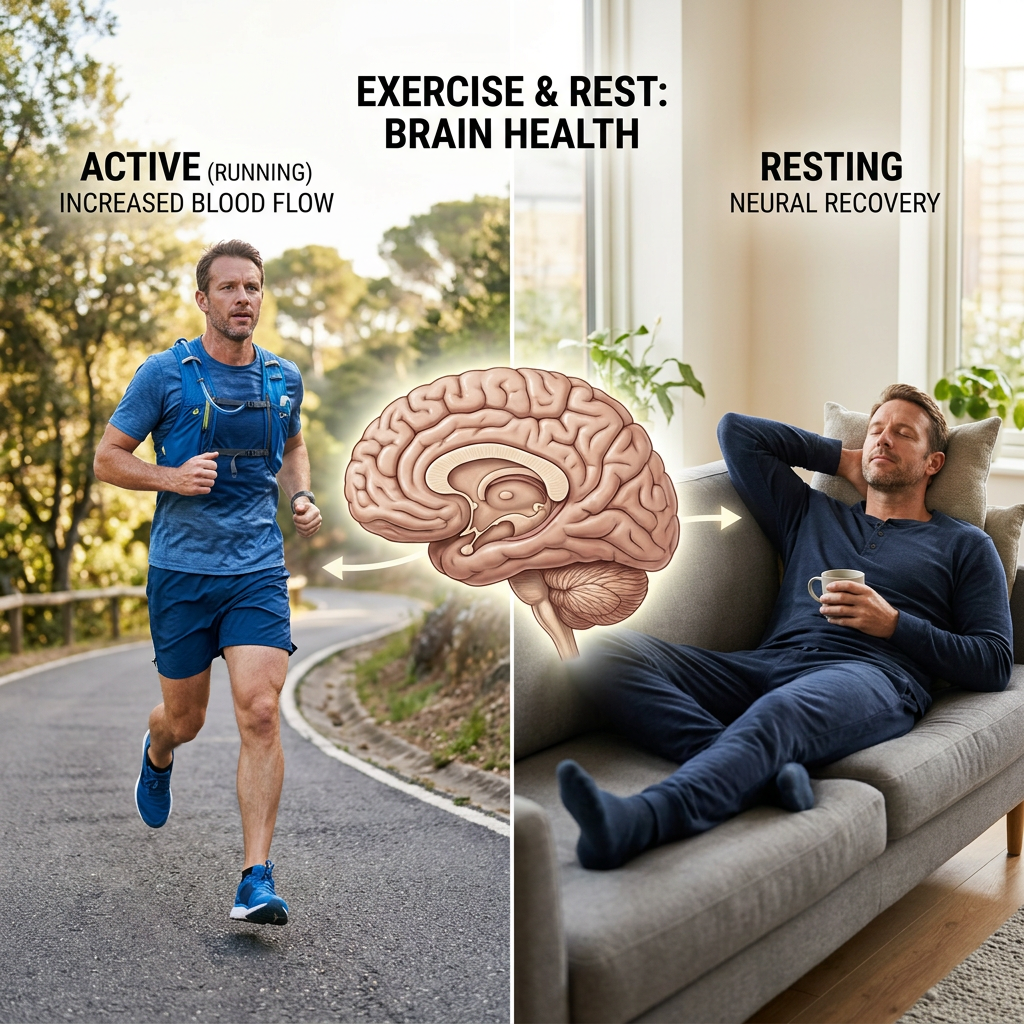
Why the brain’s quiet work matters as much as its peak performance
In today’s self-improvement culture, gamma brainwaves (roughly 30–100 Hz) get star billing. They’re linked to heightened cognition and peak performance, and a well-known study found that long-term meditators could generate unusually strong, synchronized gamma activity during practice. It’s easy to see why gamma became the brainwave everyone wants.
Meanwhile, the slower, inward side of brain function — the drifting, absorbed, restful side — gets dismissed as “not doing anything.” That’s especially true when people hear the word hypnosis.
Here’s the paradox: the brain doesn’t treat these as competitors. It uses them together. And some of its most important work happens precisely when we look like we’re doing nothing.
Brainwaves Aren’t Gears
Popular articles often describe brainwaves like gears in a transmission: you’re “in” alpha, then you “drop into” theta. That’s not how the brain works. At any given moment, your brain produces a mix of rhythms at once, in different regions. The labels describe which rhythms are more prominent, where, and during what kind of activity.
Here’s a general guide to the major frequency bands and what research associates them with:
- Delta (about 0.5–4 Hz): Most prominent in deep sleep, when the brain consolidates the day’s memories and the body restores itself.
- Theta (about 4–8 Hz): Tied to memory formation in the hippocampus and to focused, inwardly directed attention in the frontal cortex.
- Alpha (about 8–12 Hz): Linked to relaxed wakefulness and to filtering — quieting information the brain doesn’t need right now.
- Beta (about 13–30 Hz): Associated with active thinking, alertness, and holding a mental state steady.
- Gamma (about 30–100 Hz): Linked to binding pieces of information together, attention, and moment-to-moment processing.
Note: These ranges vary between researchers and between individuals. No single band equals a single “state of mind.”
Where Theta and Gamma Work Together
One of the best-studied examples of brain rhythms cooperating happens in the hippocampus, the structure that helps you form new memories. There, fast gamma bursts are nested inside the slower theta wave, a bit like cars riding on a train. Researchers believe this “theta-gamma code” helps the brain organize pieces of information in sequence so they can be stored and recalled later.
Theta also shows up toward the front of the brain — researchers call it frontal midline theta — when attention turns inward and becomes concentrated. It appears during demanding mental tasks, during meditation, and in some people during hypnosis.
So theta isn’t the “lazy” wave, and gamma isn’t the “productive” one. The brain needs both, often at the same moment.
Rest Is Not Idleness
A culture that equates stillness with laziness has the science backwards. When you stop focusing on the outside world, a set of brain regions known as the default mode network becomes more active. This network is involved in remembering the past, imagining the future, making sense of your own experiences, and understanding other people. One major research review summed it up in its title: “Rest Is Not Idleness.”
Creativity follows the same pattern. In one study, people who took a break doing an easy, undemanding task — one that let their minds wander — later came up with more creative solutions to problems they’d already seen than people who rested quietly, kept working hard, or took no break at all. The mind was working on the problem while it seemed to be off duty.
Sleep takes this even further. During deep sleep, the brain replays and consolidates what you learned during the day. The quiet work is still work. It just can’t be measured on a clock or a spreadsheet.
What About Flow?
Flow — being fully absorbed in a challenging task — is often described as a “gamma state.” Research doesn’t support a single brainwave signature for flow. One influential theory proposes that flow involves something closer to the opposite of maximum effort: a temporary quieting of parts of the prefrontal cortex responsible for self-monitoring and second-guessing. Even peak performance, it seems, depends partly on the brain getting out of its own way.
What Hypnosis Actually Looks Like in the Brain
You may have read that hypnosis is simply “a theta state.” The research is more interesting than that. EEG studies do link theta activity to hypnosis and to how responsive people are to it, but researchers reviewing that work have found no single brainwave signature that defines hypnosis.
Brain imaging paints a clearer picture. A 2017 Stanford study of highly hypnotizable people found three changes during hypnosis. Activity dropped in the dorsal anterior cingulate cortex, a region involved in scanning for what deserves attention. Connection strengthened between the prefrontal cortex and the insula, a region that helps the brain monitor and regulate what’s happening in the body. And connection weakened between the prefrontal cortex and the default mode network, which may reflect less self-conscious commentary about what you’re doing.
In plain terms, hypnosis looks like focused absorption: attention narrowed and steadied, less internal second-guessing, and a stronger link between mind and body. You’re awake the whole time.
That’s why hypnosis isn’t about control or surrender. The hypnotist doesn’t impose change. The process creates conditions — calm, focused, absorbed — in which you’re better able to consider new suggestions, evaluate them, and rehearse new ways of responding.
You’ve Been Here Before
Most people have experienced this kind of absorption without calling it anything. Getting so lost in a book that you don’t hear your name. Being so wrapped up in music that time seems to disappear. Arriving home after a familiar drive with little memory of the trip. Psychologists call this capacity absorption, and it’s one of the traits linked to how readily a person responds to hypnosis.
We’ve all been in trance before. We just didn’t know it had a name.
The Real Cost of Constant Hustle
The problem with living “always on” isn’t that fast brainwaves burn you out. It’s that sustained stress without recovery does. When the body’s stress systems stay activated without a chance to reset, the wear and tear accumulates — what researchers call allostatic load. Recovery isn’t a break from productive living. It’s part of it.
Final Thought
Gamma and theta aren’t rivals. Effort and absorption, focus and rest, doing and integrating — the brain uses all of them, often at the same time. When we prize only the high-intensity hustle and dismiss the quiet, absorbed side of the mind, we ignore half of how the brain actually works.
If this resonates and you’re wondering how hypnosis could support your own journey, let’s talk.
Disclaimer: This post shares information considered reliable from various sources. It is intended as information only and is not intended as advice to engage in any specific physical or mental activity. Always consider whether this information is appropriate for you and always confer with your health professionals.
Discover more from Kevin Rogers Hypnosis
Subscribe to get the latest posts sent to your email.