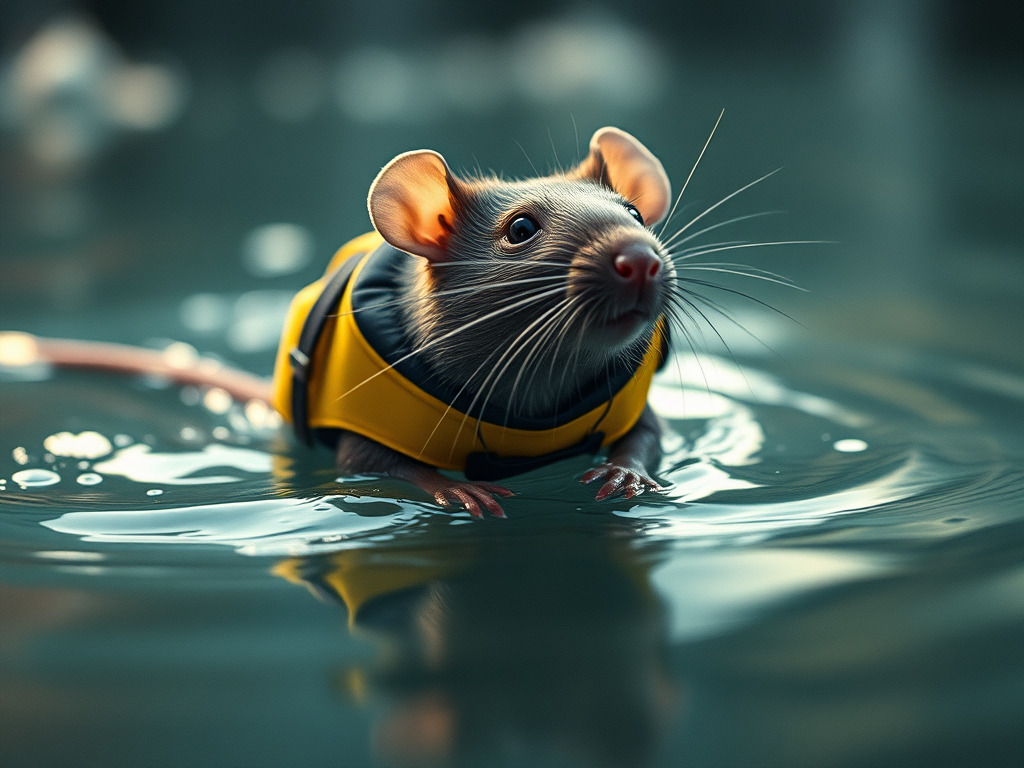
In the 1950s, Curt Richter, a researcher at Johns Hopkins, conducted a simple yet revealing experiment that sheds light on one of the most powerful forces in both animals and people — hope. Mr. Richter placed a group of rats in a container of water to observe how long they would continue to swim before giving up. The initial results were surprising: wild rats, known for their strength and survival instincts, often stopped swimming after only a few minutes. It seemed when faced with an impossible situation, and no sign of escape, their bodies simply gave out.
Mr. Richter then introduced a variation. Just before the rats reached the point of exhaustion, he lifted them out of the water, dried them off, and allowed them to rest for a while. When these same rats were returned to the water, something remarkable happened — they swam for hours, sometimes for days. What changed? Not their strength. Not their physical condition. What changed was their expectation.
The rats had experienced rescue once before. On some instinctive level, they “knew” that help might come again. That single experience of relief — that memory of being saved — sparked something inside them that dramatically extended their endurance. Mr. Richter concluded that the possibility of rescue — or, more broadly, the presence of hope — could make the difference between surrender and survival.
It’s easy to see the parallel in our own lives. When people feel trapped in stress, fear, or hopelessness, their energy and motivation often drain away. But the moment they sense even a small glimmer of possibility — a pathway forward, a helping hand, a shift in perspective — their resilience returns.
Hope isn’t wishful thinking. It’s the mind’s way of saying, “Keep going — something better may still be possible.” And sometimes, as Mr. Richter’s rats remind us, that belief alone can carry us much farther than we imagined.
Hope and expectation are not abstract emotions — they are biological signals that shape how the body and mind respond to challenge. The more we nurture them through small wins, self-compassion, and supportive connections, the more resilient we become.
To Schedule a Call Back Click Here
Disclaimer: The “Just Suppose Newsletter” and Blog share ideas in exploring personal progress as derived from various sources. It is intended as information only and is not intended as advice to engage in any specific physical or mental activity. Always consider whether these ideas, concepts, techniques & activities are right for you & always confer with your health professionals.
Discover more from Kevin Rogers Hypnosis
Subscribe to get the latest posts sent to your email.