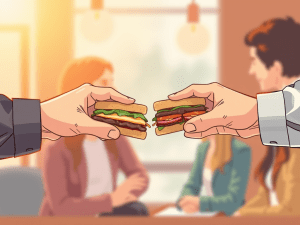
Have you ever accepted a sample at the grocery store and then felt oddly obligated to buy the full product? Or maybe someone did you a small favor and you returned the gesture. That’s reciprocity at work..
In his book Influence: The Psychology of Persuasion, Dr. Robert Cialdini identifies Reciprocity as one of the six universal principles that guide human behavior. It’s the social glue that binds relationships, cultures, and entire civilizations. But when you understand how it works, you can also see how easily it’s used—sometimes unknowingly—to steer decisions.
What Is Reciprocity?
At its core, reciprocity is the human tendency to repay what another person has provided. It’s a deeply ingrained social rule: if someone gives to us, we feel a strong desire to give back.
This instinct likely evolved to promote cooperation. “You help me today, I help you tomorrow” b
But in modern society, this ancient impulse is just as active—and more easily prompted than we realize.
How Reciprocity Shows Up Today
Reciprocity is all around us, often hiding in plain sight:
🍬 The Mint Trick
Cialdini cites a famous study in which restaurant servers saw an increase in tips simply by leaving a mint with the check. One mint increased tips by 3%. Two mints? A 14% increase. The gesture is small—but it activates the impulse to give back.
📨 Gifts from Charities
Ever received return address labels or greeting cards in the mail from a nonprofit—before you made a donation? That’s reciprocity in action. These “gifts” are designed to increase the feeling to give back and increase the likelihood of a donation.
🛍️ Free Samples
At Costco or the farmer’s market, free samples aren’t just about taste-testing. They’re powerful prompts of reciprocity. We might find ourselves purchasing something we didn’t plan to—because we were given something first.
Why It Works
Reciprocity doesn’t just nudge behavior—it creates a psychological imbalance that we feel compelled to resolve. Cialdini notes that it’s not about equal exchange. Often, the return favor is greater than the original gift. That’s because reciprocity is driven more by emotion than logic. The discomfort of being in someone’s debt—even momentarily—pushes us to do something to rebalance. And this urge to reciprocate doesn’t depend on whether we like the giver. Even if we don’t particularly trust or enjoy the person, we’re still likely to return the favor—because it’s the principle, not the personality, that encourages the return favor.
Reciprocity is one of the most powerful and automatic levers of influence. It governs everything from holiday gift-giving to business deals. When used wisely, it builds trust and community. Next time someone offers you something—big or small—notice what stirs inside. The desire to give back is human. But making that return on reasonable terms should also be considered. That’s influence with awareness.
✅ Want to Experience Positive Influence in Action?
If you want to be more influential, speak better in public, and increase rapport, let’s talk. Schedule your free 15-minute strategy call today and experience how aligned influence can unlock real change.
My Resources Page: Guides, Foods Lists, PDF Downloads
Disclaimer: The “Just Suppose & Level Up Blog” shares ideas in exploring personal progress as derived from various sources. It is intended as information only and is not intended as advice to engage in any specific physical or mental activity. Always consider whether these ideas, concepts, techniques & activities are right for you & always confer with your health professionals.
Discover more from Kevin Rogers Hypnosis
Subscribe to get the latest posts sent to your email.