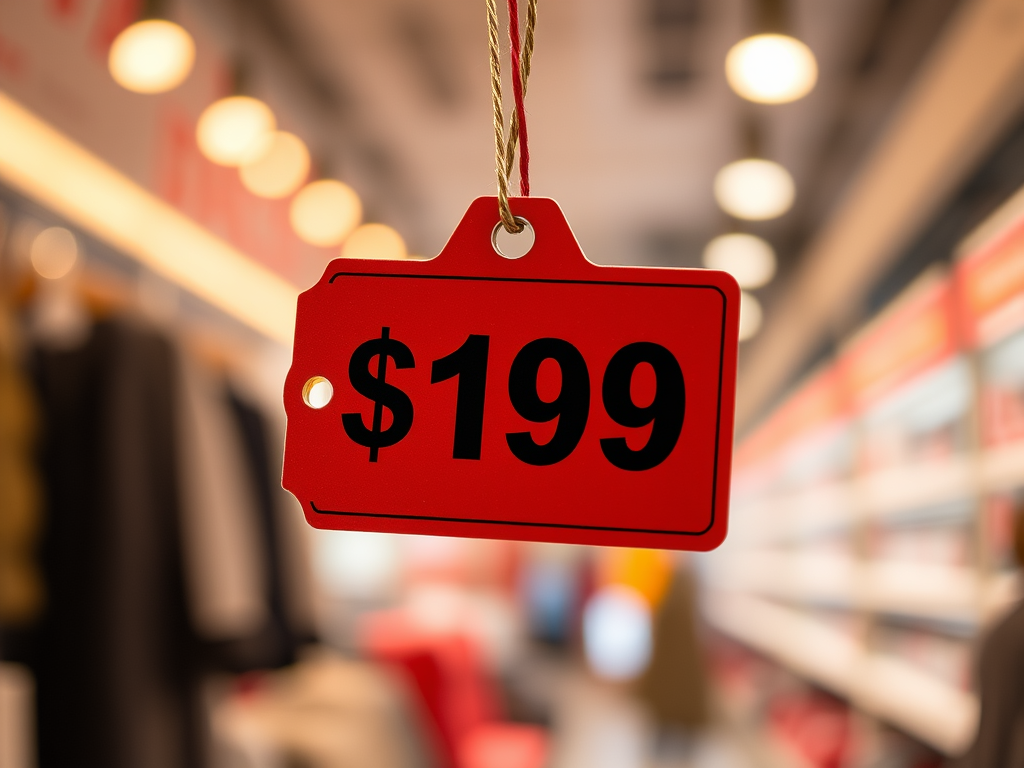
Have you ever wondered why so many prices end in “9”? From furniture showrooms to online stores, it’s common to see items listed at $199 instead of $200, or $97 instead of $100. While the difference is just a few dollars — sometimes just one — the psychological impact on consumers is significant. This phenomenon, known as Charm Pricing, is more than just a sales gimmick. It taps into how our brains perceive value, and it’s been influencing buying behavior for over a century.
The Origins: A Retail Revolution
One of the earliest recorded uses of charm pricing dates back to the late 1800s and early 1900s. Some stories credit department stores and even cash register manufacturers for popularizing the tactic. There’s even a legend that furniture retailers were among the first to notice a marked increase in sales when items were priced at $199 instead of $200. The reasoning was simple but profound: customers perceived $199 as a better deal — not just slightly better, but meaningfully better. This small difference wasn’t just about affordability. It played into something deeper: the way people process numbers.
The Psychology Behind the Price
At the core of charm pricing is what’s known as left-digit bias. Our brains tend to anchor on the first number we see, even if the rest of the number is close in value. So when we see $199, the “1” makes the price feel like it’s in the $100s, not the $200s — even though it’s only one dollar shy of the next bracket.
This effect is so strong that in split tests across industries, prices ending in “9” consistently outperform rounded prices. A study published in Quantitative Marketing and Economics found that a women’s clothing item priced at $39 outsold the same item priced at $34. That’s not a typo — even higher charm prices performed better than lower rounded ones.
More Than Just a Number
Charm pricing also signals value-consciousness. When a customer sees a price like $197 or $194, it communicates that the seller has carefully calculated their price — it feels intentional. Rounded numbers, in contrast, can sometimes feel arbitrary or less competitive.
In addition, prices that end in “7” or “4” can be used to differentiate products or create a slightly more unique psychological anchor. These numbers still fall under the umbrella of charm pricing but stand out just enough to avoid feeling mass-produced.
How This Applies to Modern Business
Whether you’re selling physical goods, digital services, or coaching packages, understanding charm pricing can increase conversions without lowering the value of your offer. For instance:
- A $500 course might sell better at $497.
- A $50 yoga class might attract more bookings at $49 or even $44.
- Even luxury items benefit from subtle charm pricing — think $2,995 instead of $3,000.
What’s important is that the perceived value remains high. Charm pricing works best when it complements the product’s story, not when it undermines it with a “cheap” feel.
Final Thought
A one-dollar difference might not seem like much, but in the world of human psychology, perception is everything. Whether you run a local furniture store or an online T-shirt business, the way you price your offerings tells a story. And sometimes, the difference between $200 and $199 is the difference between hesitation and action.
Have a personal interest? Contact me to explore personal interests by clicking the link. Schedule a Callback Now
Disclaimer: The “Just Suppose Blog” shares ideas in exploring personal progress as derived from various sources. It is intended as information only and is not intended as advice to engage in any specific physical or mental activity. Always consider whether these ideas, concepts, techniques & activities are right for you and always confer with your health professionals.
Discover more from Kevin Rogers Hypnosis
Subscribe to get the latest posts sent to your email.